Nebulizer Treatment in Koh Phi Phi
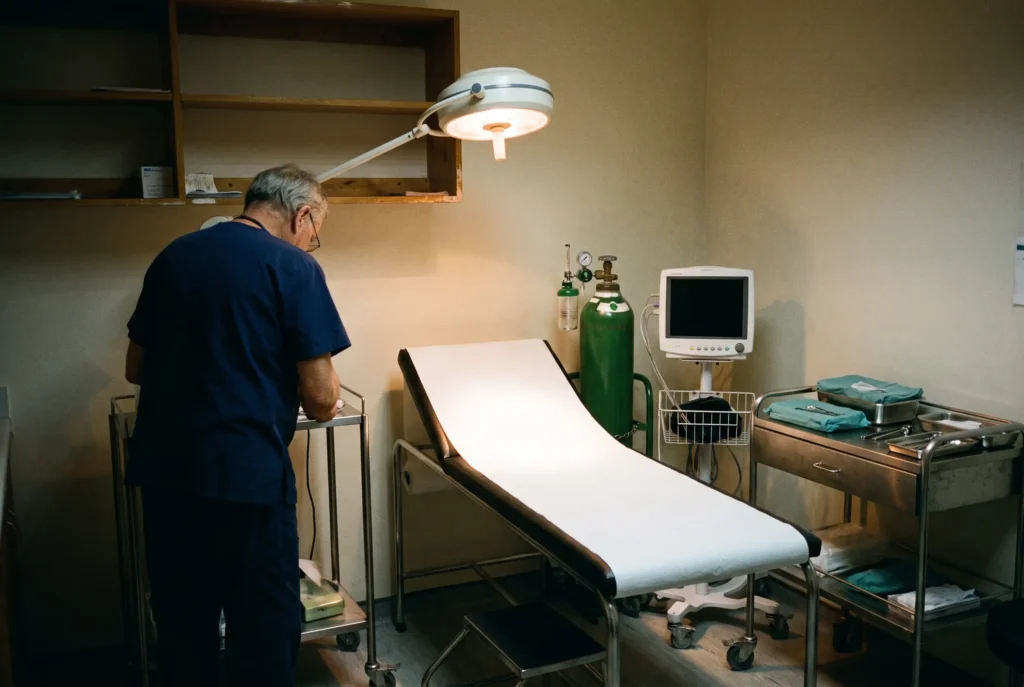
An asthma flare-up on Koh Phi Phi is a different proposition from one at home. There is no hospital on the island, no ambulance, and after dark a crossing means chartering a boat. Nebulizer treatment in Koh Phi Phi opens the airways within minutes and is available at any hour, which on this island is the difference between a bad hour and a night-time evacuation.
What a nebulizer does
It turns liquid medication into a fine mist that you breathe through a mask for ten to fifteen minutes. The medication reaches the small airways directly and relaxes the muscle tightening around them.
The advantage over an inhaler is not the drug — it is often the same one. It is that a nebulizer needs no technique and no coordination. Somebody genuinely breathless cannot use an inhaler properly, which is exactly when they need it most, and a mask asks nothing of them beyond breathing.
Most people feel the tightness easing within five minutes, and the effect continues for several hours.
When it is the right treatment
An asthma attack not responding adequately to a reliever inhaler. Wheezing and chest tightness that has built through the day. A chest infection with significant wheeze. Severe allergic reactions affecting the airways, alongside other treatment.
It also helps people with existing lung conditions struggling in humidity, and occasionally children with viral wheeze, where a mask is far more practical than asking a distressed four-year-old to coordinate an inhaler.
What it does not treat is breathlessness that is not coming from the airways. Chest pain with breathlessness, or breathlessness with no wheeze at all, needs a different assessment — and after diving, breathing difficulty is treated as a diving emergency until proved otherwise. See emergency care and dive medical.
Why this island sets off asthma
Several things at once, and travellers rarely connect them.
Humidity is the main one — heavy damp air is harder work to move, and it carries more mould spores and dust mites than most people are used to. Then air conditioning, which is cold, dry and recirculated, and irritates airways that have spent the day in the opposite conditions.
Then the local specifics. Boat exhaust hangs in still air along the piers and beaches. There is a good deal of cigarette smoke in the bars. Rubbish is burned in places. And the fire shows put paraffin smoke straight into the air above a crowded beach, which is a genuine trigger for anybody sensitive and one nobody expects.
Bring your inhaler, and the truth about running out
The commonest problem we see is not a severe attack. It is somebody who packed one reliever inhaler for three weeks, used it more than expected in the humidity, and has now run out.
Entirely fixable — we stock reliever medication and can issue it — but worth avoiding. Bring more than you think you need, bring your preventer inhaler and keep taking it rather than treating the holiday as a break from it, and bring the box so the medication name is unambiguous. See prescription refill.
If your asthma has needed more reliever than usual for several days running, that is a warning sign rather than an inconvenience. Come in before it becomes an attack, and on an island where getting off after dark is difficult, that advice carries more weight than it would at home.
The signs that mean an emergency
Call 1669 and call us at the same time for any of these:
- Too breathless to speak in full sentences
- Blue or grey lips or fingertips
- Exhaustion, confusion or drowsiness
- A reliever inhaler having no effect at all
- A silent chest — wheezing that stops while breathing is still difficult
That last one is the dangerous one and it is routinely misread as improvement. Wheeze requires air moving; when almost no air is moving, the wheeze disappears. A quiet chest in somebody still struggling is worse, not better.
What we do alongside the nebulizer
Oxygen saturation and pulse before, during and after, so the response is measured rather than described. Oxygen where levels are low. Steroids, usually oral, where the flare-up warrants it — those take a few hours to work but substantially reduce the chance of a rebound overnight.
We repeat the nebulizer if needed and observe for a period afterwards rather than sending you straight out, because a proportion of people tighten up again once the initial effect fades.
If the response is poor, that is a transfer decision and we make it early rather than late. On an island where the crossing takes two hours and boats thin out after dark, waiting to see how the night goes is not a neutral choice — see evacuation and hospital transfer.
Afterwards, and the rest of your trip
Expect a slightly racing heart and mild shakiness for half an hour. That is the medication and it is harmless.
Set the air conditioning warmer and less dry, and keep the room ventilated. Take your preventer inhaler consistently. Stay away from the beach during fire shows for a few days, and be honest with whoever you are travelling with about what happened, because they need to know where your inhaler is.
If you needed a nebulizer once on this trip, keep a reliever inhaler on you rather than in the room. And if you dive, talk to us before the next dive rather than after — an airway that has been unstable this week is a different risk at depth. Heat also degrades inhalers, so a canister left in a bag on a boat deck all day may deliver less than it should.
Frequently asked questions
How long does a nebulizer treatment take?
Ten to fifteen minutes, and most people feel the tightness easing within about five.
Are you open for this at night?
Yes, around the clock. On an island where a night crossing means chartering a boat, that is the whole point.
Do I need to bring my own inhaler?
Bring it if you have it, and bring the box. We also stock reliever medication if you have run out.
Why does my asthma get worse here?
Humidity, mould and dust mites, then cold dry air conditioning, plus boat exhaust, cigarette smoke and paraffin smoke from the fire shows.
Can children have a nebulizer?
Yes, and a mask is often far more practical than an inhaler for a distressed child.
I feel shaky afterwards. Is that normal?
Yes. A racing heart and mild tremor for half an hour is a normal effect of the medication.
Can I dive after an asthma attack?
Not without being assessed first. An airway that has been unstable this week behaves differently at depth, and it is worth a conversation rather than an assumption.
Who treats you, and at what hour
English-speaking doctors on site, 24 hours a day. That is the part worth dwelling on, because Koh Phi Phi has no hospital and no road off it. The nearest emergency department is a ferry away on the mainland, and the ferries stop at night — so between roughly sunset and morning, a clinic that is actually open is the only medical care on the island. We are part of the Takecare Clinic group operating across Krabi and Phuket, which is what makes onward referral and continuing treatment on the mainland straightforward rather than something you arrange yourself from a hotel room.
Getting seen
Doctor Phi Phi Takecare Clinic is 24 hours, every day — genuinely, not as a phone line. No appointment is needed at any point and there is no wrong time to turn up. Walk in, or reach us on +66 82 140 3858 or WhatsApp. If you would rather not move, ask for a doctor hotel visit and we will come to you. And if this turns out to be beyond what the island can handle, that same call is how the ferry and the hospital transfer start being arranged — which on Phi Phi is a process worth starting early rather than late.