Burn Treatment in Koh Phi Phi
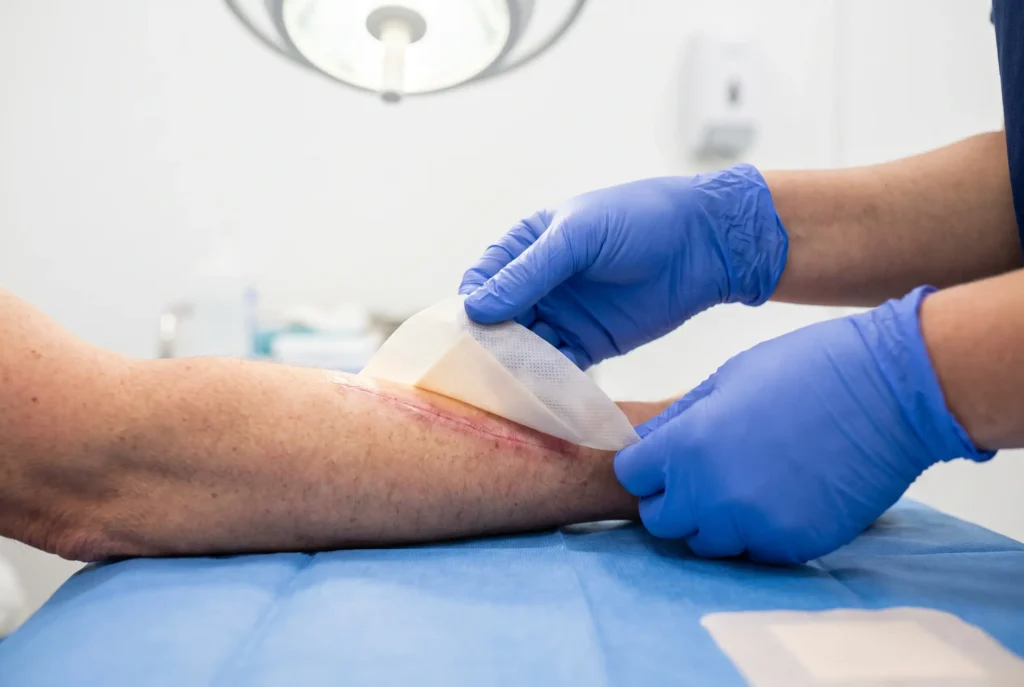
Phi Phi produces more burns than anywhere else the clinic network covers, and almost all of them come from the same source: the fire shows on Loh Dalum beach. Burn treatment in Koh Phi Phi is available at any hour, which matters, because a burn assessed and dressed within the first hour behaves very differently from one that has been left overnight.
Cool it with water. For twenty minutes.
Before anything else: hold the burn under cool running water for a full twenty minutes by the clock. Not thirty seconds, not until it stops hurting — twenty minutes.
This is the single most effective thing anyone does for a burn, and it works up to about three hours after the injury. It limits how deep the burn goes, which is the thing that determines whether it scars and whether it needs a skin graft.
Cool water, not ice. Ice causes a cold injury on top of the heat injury and can deepen the wound. Do not use butter, oil, toothpaste, aloe straight off a plant, or anything else suggested at a beach bar. Remove rings and watches near the burn before swelling starts, and take off anything smouldering — but do not pull away clothing that is stuck to skin.
The fire show injuries, specifically
The classic is the flaming skipping rope. Somebody is encouraged into the middle of a crowd, misjudges the timing, and the rope wraps a calf, a thigh or a forearm. It happens at speed with a hot rope that has been soaked in fuel, and the burn is often a clean stripe.
Fire poi and fire staff produce a different pattern — spatter burns on hands, arms and chest from fuel flicking off the wick. Smaller individually, frequently multiple, and easy to underestimate because each spot looks minor.
Two things make these worse than the equivalent burn at home. Alcohol is nearly always involved, which delays both the reaction and the cooling. And people carry on the night, so the wound spends hours in sand, seawater and sweat before anyone looks at it.
How deep is it, and why that is the whole question
Superficial burns are red, painful, and have no blisters. They heal in a week or so without scarring.
Partial thickness burns blister, are very painful, and look wet or shiny underneath. Most heal in two to three weeks with proper dressing, though deeper ones scar.
Full thickness burns look white, brown or leathery, and are often not painful at all in the centre because the nerve endings have gone. Painlessness in a burn is a bad sign, not a good one. Those need specialist care on the mainland.
Depth is frequently not obvious on day one and declares itself over forty-eight hours, which is why a burn gets reviewed rather than dressed once and forgotten.
When a burn needs the mainland
Come in for any burn regardless, and expect a transfer for these:
- Anything larger than the palm of your hand
- Burns on the face, hands, feet, genitals or across a joint
- Any burn that goes all the way round a limb
- White, leathery or painless areas
- Any burn with breathing difficulty or soot around the mouth
- Burns in a small child or an elderly person
Hands and joints are on that list for function rather than size. A burn across the back of a hand that heals with tight scar tissue permanently limits how the hand moves, and that outcome is decided in the first fortnight — see evacuation and hospital transfer.
What we do at the clinic
Cool the burn properly if that has not already been done well, then adequate pain relief before anything is touched — burns dressings hurt, and there is no reason to be brave about it.
Then careful cleaning, which on this island means removing sand, fuel residue and whatever else the night deposited. Blisters are managed rather than automatically popped: large or awkwardly placed ones are usually deroofed under sterile conditions, small ones left intact as their own dressing.
Then a dressing suited to a burn rather than a cut — burns exude heavily and need something absorbent that will not stick to the base — plus a tetanus booster if cover has lapsed, and a review date. See fire show burns for more on that specific mechanism.
The next two weeks
Daily dressing changes at first, and we do them without an appointment at any hour. That frequency is not fussiness: a saturated dressing stops protecting and starts incubating, and in this humidity that happens fast.
Keep it out of the sea and out of the pool while it is open. This is the unwelcome part of the advice on a beach island, and it is the difference between healing in two weeks and healing in six with an infection along the way.
Watch for infection — spreading redness, increasing pain after day two, discharge, or fever. Spreading redness is cellulitis and needs antibiotics the same day.
Scarring, and the sun
New scar tissue pigments permanently if it is exposed to strong sun, and Phi Phi has some of the strongest sun most visitors will encounter. Keep a healing burn covered for months rather than weeks, and use high-factor sunscreen on it once it has closed.
Massaging the scar gently once fully healed, and keeping it moisturised, genuinely reduces how tight and raised it ends up. Silicone gel or sheeting helps if it starts thickening.
And a practical note for anyone tempted by the rope: the people jumping it are mostly sober staff who do it nightly. If you are neither, the odds are not what they look like from the beach.
Frequently asked questions
What should I do first?
Cool running water for twenty full minutes. It limits how deep the burn goes and works for up to about three hours after the injury.
Should I use ice?
No. Ice adds a cold injury on top of the heat injury and can deepen the burn. Cool water only.
Should I pop the blisters?
Not yourself. Large or awkwardly placed blisters are usually deroofed under sterile conditions at the clinic; small ones are best left intact.
My burn does not hurt much. Is that good?
No, it is a warning sign. Painlessness suggests a full thickness burn where the nerve endings have been destroyed, and that needs specialist care.
Can I swim with a burn?
Not while it is open. Seawater and pool water in a fresh burn is one of the more reliable ways to get it infected here.
Will it scar?
Depends on depth. Proper cooling, clean dressings and keeping infection out make the biggest difference, and keeping it out of the sun for months prevents permanent darkening.
Are you open after the fire shows finish?
Yes, all night. Most of the burns we treat arrive between midnight and four in the morning.
Who treats you, and at what hour
English-speaking doctors on site, 24 hours a day. That is the part worth dwelling on, because Koh Phi Phi has no hospital and no road off it. The nearest emergency department is a ferry away on the mainland, and the ferries stop at night — so between roughly sunset and morning, a clinic that is actually open is the only medical care on the island. We are part of the Takecare Clinic group operating across Krabi and Phuket, which is what makes onward referral and continuing treatment on the mainland straightforward rather than something you arrange yourself from a hotel room.
Getting seen
Doctor Phi Phi Takecare Clinic is 24 hours, every day — genuinely, not as a phone line. No appointment is needed at any point and there is no wrong time to turn up. Walk in, or reach us on +66 82 140 3858 or WhatsApp. If you would rather not move, ask for a doctor hotel visit and we will come to you. And if this turns out to be beyond what the island can handle, that same call is how the ferry and the hospital transfer start being arranged — which on Phi Phi is a process worth starting early rather than late.