Cellulitis treatment in Koh Phi Phi
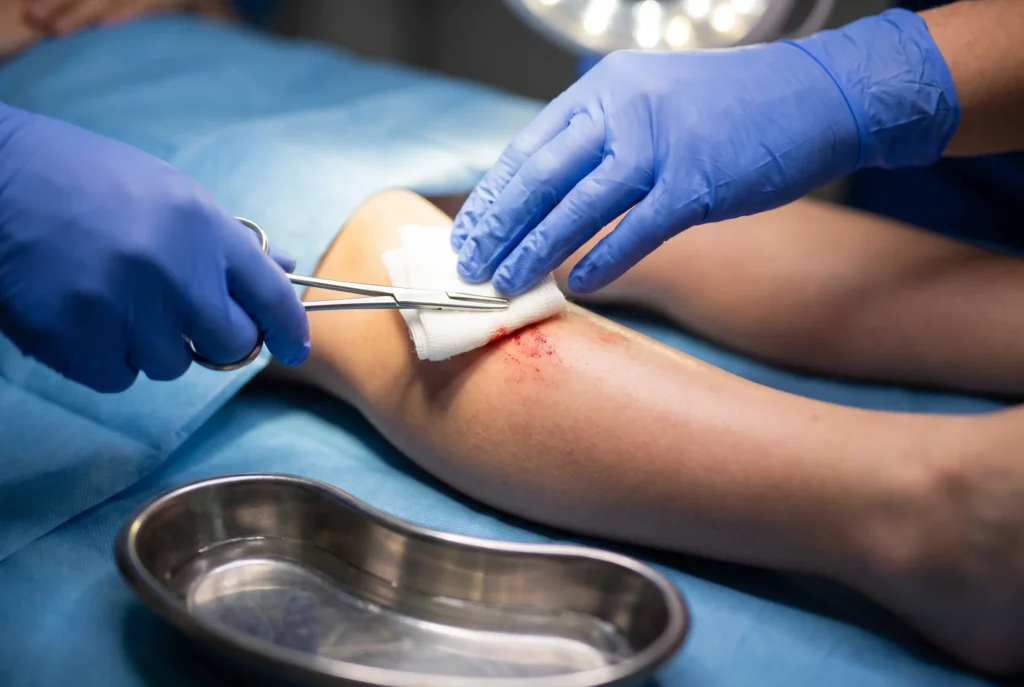
Redness spreading outward from a cut, hot to the touch and more painful today than yesterday. That is not slow healing — it is a bacterial infection moving through the skin, and it does not resolve on its own. Cellulitis treatment in Koh Phi Phi is one of the few things here where the difference between coming in on day one and day four is the difference between tablets and a boat.
What it looks like
An area of skin that is red, warm, swollen and tender, with a spreading edge rather than a defined border. It usually starts around a break in the skin, though the break may have been small enough to forget.
- Redness that is expanding, not static
- Warmth you can feel with the back of your hand
- Swelling and increasing pain
- A red line tracking away from the site
- Fever, chills or feeling generally unwell
- Swollen tender glands in the groin or armpit on that side
Draw around the edge with a pen and note the time. If the redness is outside that line in a few hours, it is spreading, and that is the single most useful thing you can tell us.
Why this island produces so much of it
Every ingredient is here at once. Skin gets broken constantly — coral grazes, urchin punctures, scratched bites, fire show burns, and falls on the viewpoint steps.
Then warm sea water carrying organisms including Vibrio species, humidity that keeps everything damp, heat that speeds bacterial growth, and a lifestyle where wounds stay wet all day.
And a delay factor. People are on holiday, the wound is small, and getting seen means walking somewhere in the heat — so they wait. That delay is precisely what turns a treatable infection into a serious one.
The treatment, and why it must not be interrupted
Oral antibiotics for seven to ten days, chosen for the likely organisms — which on this coast includes marine bacteria that some common antibiotics do not cover well, so a course brought from home is not necessarily the right one.
Elevate the affected limb above the level of the heart whenever you are sitting or lying. This is genuinely effective and almost universally ignored. A leg propped up for the afternoon reduces swelling more than any tablet.
Finish the full course. Cellulitis that looks better on day three and is abandoned relapses reliably, and the relapse is generally harder to treat than the original.
When tablets are not enough
Some cellulitis needs intravenous antibiotics, and that means a hospital on the mainland — see evacuation and hospital transfer.
The triggers: redness spreading despite twenty-four to forty-eight hours of oral antibiotics, significant fever, infection involving the face or around the eye, infection over a joint, anyone with diabetes or reduced immunity, or somebody who simply looks unwell rather than uncomfortable.
We reassess at twenty-four to forty-eight hours specifically to catch this, and that review is not optional. Marking the edge at the first visit is what makes the second visit meaningful.
The signs that mean go now
Rare, and worth knowing. Pain far out of proportion to what the skin looks like, skin turning dusky or purple, blisters forming over the red area, crackling under the skin, rapidly worsening illness, or confusion.
That combination raises the possibility of a deeper and much more serious infection, which is a surgical emergency. Call 1669 and call us at the same time. It is uncommon, and it is the reason we would rather see you early with something that turns out to be minor.
Anyone with diabetes should treat any spreading redness as urgent from the outset rather than watching it overnight.
What we do at the clinic
Examine and mark the edge, take a temperature, and assess how unwell you actually are rather than how unwell you feel.
Blood tests where there is fever or the picture is uncertain — inflammatory markers and a white cell count tell us whether this is contained or systemic, and that decides tablets versus a crossing.
Then antibiotics, wound care for the original break in the skin, pain relief, and clear instructions about what should be better in twenty-four hours and what should send you back sooner. At any hour — an infection that is visibly worse at midnight does not have to wait for the morning boat schedule.
Not getting it again
Clean every break in the skin properly on the day it happens, however trivial. That is the whole of the prevention, and on this island it is worth doing with more care than at home.
Keep wounds covered and dry while they are open, which means staying out of the sea rather than covering them with a waterproof plaster and diving anyway. Change dressings daily and after they get wet.
Treat athlete’s foot, because cracks between the toes are a common entry point for leg cellulitis and almost nobody makes the connection — see skin rash treatment. And people who have had cellulitis once are more likely to get it again in the same limb, because the first episode damages the small lymphatic vessels that drain the area. If that is you, take breaks in the skin on that limb seriously from the first day rather than the third.
Frequently asked questions
How do I know it is cellulitis and not just healing?
Healing gets less red and less painful each day. Cellulitis spreads and hurts more. Draw around the edge with a pen and check it a few hours later.
Can I wait until tomorrow?
No. Treated on day one it is tablets. Treated on day four it can mean intravenous antibiotics on the mainland.
How long do antibiotics take to work?
You should see improvement within twenty-four to forty-eight hours. If the redness is still spreading after that, come back — it needs escalating.
Can I use antibiotics I brought from home?
Not reliably. Marine bacteria on this coast are not well covered by some common antibiotics, so the choice matters.
Do I really need to elevate it?
Yes, and it is the most ignored part of the treatment. Above heart level whenever you are sitting or lying down.
When is it an emergency?
Pain out of proportion to the appearance, dusky or purple skin, blisters over the red area, or rapidly worsening illness. Call 1669 and call us.
Can I dive while it heals?
No. Sea water on the wound that started it is how the whole thing began.
Who treats you, and at what hour
English-speaking doctors on site, 24 hours a day. That is the part worth dwelling on, because Koh Phi Phi has no hospital and no road off it. The nearest emergency department is a ferry away on the mainland, and the ferries stop at night — so between roughly sunset and morning, a clinic that is actually open is the only medical care on the island. We are part of the Takecare Clinic group operating across Krabi and Phuket, which is what makes onward referral and continuing treatment on the mainland straightforward rather than something you arrange yourself from a hotel room.
Getting seen
Doctor Phi Phi Takecare Clinic is 24 hours, every day — genuinely, not as a phone line. No appointment is needed at any point and there is no wrong time to turn up. Walk in, or reach us on +66 82 140 3858 or WhatsApp. If you would rather not move, ask for a doctor hotel visit and we will come to you. And if this turns out to be beyond what the island can handle, that same call is how the ferry and the hospital transfer start being arranged — which on Phi Phi is a process worth starting early rather than late.