Coral cut treatment in Koh Phi Phi
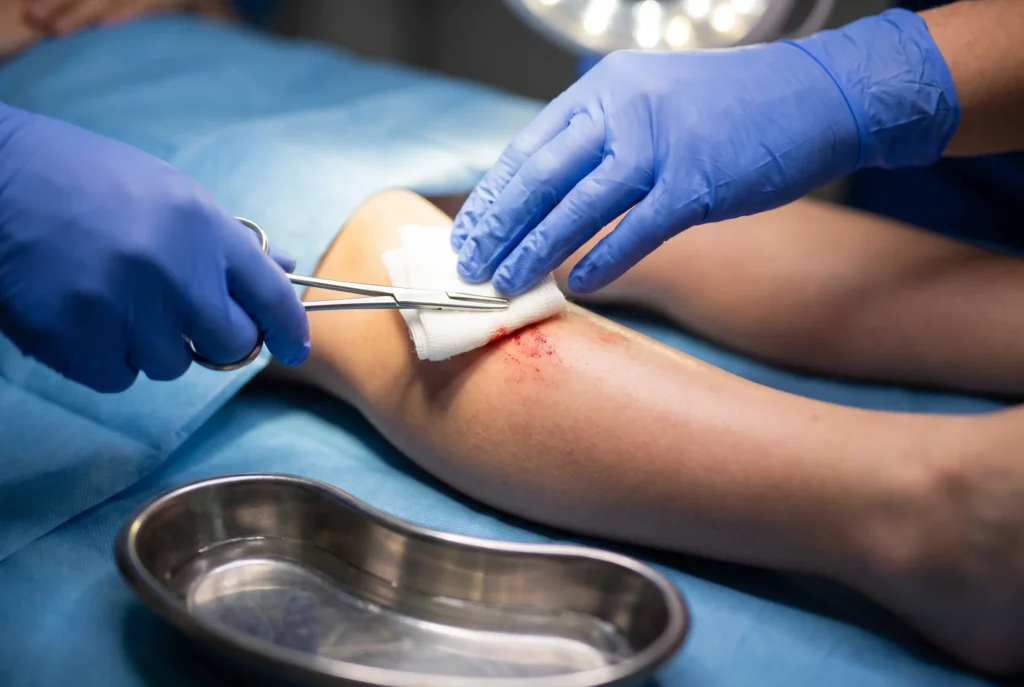
A coral graze looks like almost nothing. Four days later it is red, swollen and refusing to heal, and the person is surprised because it was such a small thing. Coral cut treatment in Koh Phi Phi is worth taking seriously precisely because the wound is trivial and the infection risk is not — coral leaves things behind that ordinary cuts do not.
Why coral wounds behave badly
Three problems at once, and none of them is the size of the cut.
Coral fragments break off and stay embedded in the wound, invisible against pink tissue. Living coral carries a surface layer of bacteria and stinging cells that inject a mild venom, which is why the wound often stings and itches out of proportion to its size. And warm sea water carries organisms — including Vibrio species — that cause infections rarely seen in temperate countries and that move quickly.
Add a hot, humid climate and daily swimming, and a graze that would heal unremarkably at home becomes a two-week problem here.
First aid in the first ten minutes
Get out of the water. Rinse thoroughly with clean fresh water — coral is the opposite of a jellyfish sting in this respect, and here fresh water is exactly right.
Scrub gently rather than dabbing. This is uncomfortable and it is the step that matters most: the goal is removing coral fragments, sand and grit rather than merely cleaning the surface. A clean cloth and running water for several minutes does more than any antiseptic applied over the top of debris.
Then antiseptic if you have it, and a dressing. Do not seal a dirty wound under a waterproof plaster and carry on with the day, and do not get straight back in the water because the snorkel trip has an hour left.
Come in if any of these apply
Honestly, come in for most coral cuts, because what needs doing is proper irrigation rather than a plaster. Specifically:
- You cannot get the wound properly clean
- Anything is still visible or felt within it
- The wound is deep, gaping, or over a joint
- Redness spreading outward after a day or two
- Increasing rather than decreasing pain
- Any discharge, or a smell
- Fever, or feeling generally unwell
Spreading redness is cellulitis and it does not resolve on its own. Treated early it is oral antibiotics; treated late it means intravenous antibiotics on the mainland.
What we do that you cannot do at a hotel
Proper irrigation under pressure with sterile fluid, and removal of embedded fragments under local anaesthetic and good light. That is the whole difference, and it is why a ten-minute visit on day one prevents a fortnight of trouble.
Where a wound is deep or gaping it may need closing — see stitches — though a contaminated coral wound is frequently better left open or closed loosely rather than sealed shut with bacteria inside.
We also cover the other two questions: antibiotics where the risk profile warrants it, and tetanus cover, which most travellers cannot date accurately.
Where it happens on this island
Not usually while snorkelling. The classic Phi Phi coral cut happens getting in or out of the water — standing up in shallow water over reef, or clambering back onto a longtail from the sea.
Low tide is the other one. Boats cannot reach the sand at some beaches, so passengers wade the last stretch over rock and reef, carrying bags and watching the boat rather than their feet.
Cliff jumping and deep water entries add a third category. People land, then push off the bottom or a rock face to swim clear, and open a shin or a forearm without noticing until they are back on the boat.
Healing, and staying out of the water
A properly cleaned coral cut heals in one to two weeks. One that was not cleaned properly can take a month and leave a worse scar.
Keep it dry and covered while it is open, change the dressing daily and after it gets wet, and let it dry in the air overnight where possible. That is the trade-off nobody enjoys on a diving holiday, and it is the difference between one week and four.
Watch it. A coral wound that is improving looks better each day. One that is worse on day three than day two needs seeing, not more patience — and the clinic is open at any hour, so there is no reason to wait for morning.
Not getting cut in the first place
Reef shoes for walking anywhere near rock or reef, and particularly for getting in and out of boats at low tide, which is where a surprising share of these happen.
Gloves for anybody handling boat lines. A rash vest and leggings for snorkelling, which protect against grazes and stings at once.
And do not stand on coral. Beyond the injury, it kills the coral, and the reefs here have taken enough of that already — the ones people come to see are visibly worse for a decade of being walked over.
Buoyancy is the diving version of the same point. Most reef contact happens because somebody is over-weighted and fins the bottom trying to stay level, and it opens shins and the tops of feet without the diver noticing until the boat. If you are new, ask the instructor to check your weighting properly rather than adding a kilo to make descending easier — it fixes the cuts and the coral damage in one go.
Frequently asked questions
Why is a small coral cut such a problem?
Fragments stay embedded, coral carries bacteria and a mild venom, and warm sea water adds organisms that move fast. The size of the cut is not the risk.
Should I rinse with fresh water or sea water?
Fresh water, and thoroughly. That is the opposite of a jellyfish sting, where fresh water makes it worse.
Do I need antibiotics?
Not always, but more often than for an equivalent cut at home. It depends on the wound, the depth and how it looks when you come in.
How long until it heals?
One to two weeks if cleaned properly. Up to a month if fragments were left in it.
Can I keep diving?
Not while it is open. Sea water on an open coral wound is the main reason these become infected.
How do I know it is infected?
Spreading redness, increasing pain after day two, discharge, a smell, or fever. Any of those means the same day.
Do I need a tetanus jab?
If your last booster was more than ten years ago or you cannot remember, yes. Coral and reef wounds are exactly the contaminated type that warrants it.
Who treats you, and at what hour
English-speaking doctors on site, 24 hours a day. That is the part worth dwelling on, because Koh Phi Phi has no hospital and no road off it. The nearest emergency department is a ferry away on the mainland, and the ferries stop at night — so between roughly sunset and morning, a clinic that is actually open is the only medical care on the island. We are part of the Takecare Clinic group operating across Krabi and Phuket, which is what makes onward referral and continuing treatment on the mainland straightforward rather than something you arrange yourself from a hotel room.
Getting seen
Doctor Phi Phi Takecare Clinic is 24 hours, every day — genuinely, not as a phone line. No appointment is needed at any point and there is no wrong time to turn up. Walk in, or reach us on +66 82 140 3858 or WhatsApp. If you would rather not move, ask for a doctor hotel visit and we will come to you. And if this turns out to be beyond what the island can handle, that same call is how the ferry and the hospital transfer start being arranged — which on Phi Phi is a process worth starting early rather than late.