Food poisoning treatment in Koh Phi Phi
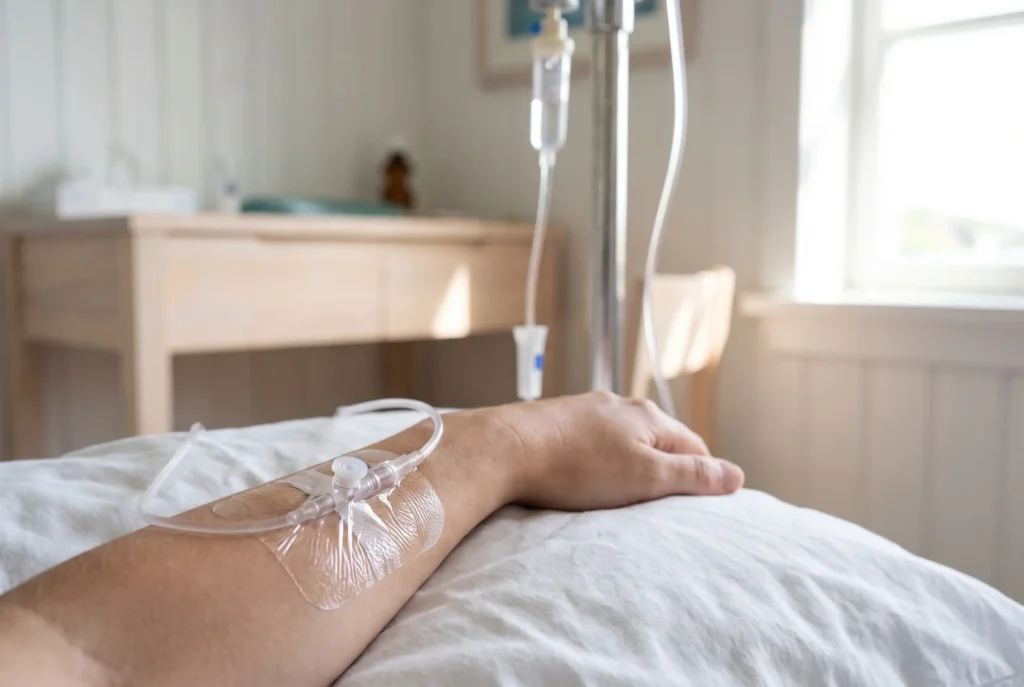
It usually starts a few hours after a meal you were pleased with at the time. Cramping, then vomiting, then everything else, and a long night in a shared bathroom. Food poisoning treatment in Koh Phi Phi is mostly about fluid — getting it in when the stomach is refusing to cooperate — and about spotting the minority of cases that are not ordinary food poisoning at all.
What the timing tells you
The gap between eating and symptoms narrows down the cause more than the meal you suspect does.
One to six hours points to a preformed toxin — bacteria that grew in food left out and released a toxin before you ate it. Staphylococcus and Bacillus cereus behave this way, reheated rice being the classic. It is violent, vomiting-dominant, and usually burns out within a day.
Eight to seventy-two hours points to an infection rather than a toxin — Salmonella, Campylobacter, E. coli. That version lasts longer, is more likely to involve fever, and is more likely to need treatment beyond fluids.
And the meal people blame is often the wrong one. Blaming last night’s dinner when the incubation was two days means suspecting the wrong kitchen entirely.
The seafood question, honestly
Everything on this island arrives by boat, which makes the cold chain longer and more fragile than on the mainland. That is a reason to be a little more careful with seafood here rather than less.
The buffet displays of fish on ice along the main strip are the specific thing worth thinking about. Fish that has sat out in thirty-degree heat under a lamp, then been grilled to order, is a different proposition from fish cooked from a fridge.
Scombroid poisoning deserves a mention because it is regularly mistaken for an allergy. Histamine builds up in poorly stored fish — usually tuna, mackerel or mahi-mahi — and produces flushing, headache, palpitations and a peppery or metallic taste within an hour of eating. It responds to antihistamines and it means the fish was badly stored, not that you are allergic to fish for life.
The fluid problem, which is the whole battle
Dehydration is what actually makes people seriously unwell, not the infection itself, and this climate accelerates it. You are losing fluid through vomiting and diarrhoea while also sweating in thirty-plus degrees.
Oral rehydration salts are the correct treatment and plain water is not — you are losing sodium and potassium as well as water, and replacing only water dilutes what is left. Sachets are cheap and available everywhere.
Sip rather than gulp. Small amounts every few minutes stay down when a full glass comes straight back. If nothing at all has stayed down for several hours, that is the point an IV drip becomes the sensible answer rather than continuing to lose the argument with your stomach.
When to come in rather than wait it out
Most food poisoning settles by itself. Come in for any of these:
- Blood in the stool
- Fever above 38.5C
- Vomiting for more than a day with nothing staying down
- Signs of real dehydration — dizziness on standing, very little urine, dry mouth, confusion
- Severe or localised abdominal pain rather than general cramping
- Symptoms lasting beyond three or four days
- Anyone very young, elderly, pregnant or with a chronic illness
Severe pain in one spot deserves particular attention. Appendicitis is regularly mistaken for food poisoning at the start, and on this island it is a surgical problem two hours away — see evacuation and hospital transfer.
Why anti-diarrhoeals are not always your friend
Loperamide stops the symptom, which is exactly what you want before a ferry crossing and exactly what you do not want with certain infections.
With an invasive bacterial infection — the kind causing fever and bloody stools — stopping the gut from emptying keeps the organisms and their toxins inside you for longer, and can make things worse.
So it is reasonable for ordinary watery diarrhoea with no fever and no blood, particularly for a two-hour boat journey with one toilet. It is the wrong choice if there is fever or blood, and that distinction is worth a consultation rather than a guess at a pharmacy. See travellers diarrhoea.
What we do at the clinic
Assess how dehydrated you actually are, which is measurable rather than a matter of opinion — blood pressure lying and standing, pulse, and how you look on examination.
Anti-nausea medication, usually by injection, because a tablet is of limited use to somebody who is vomiting. That alone frequently breaks the cycle and lets ordinary drinking resume.
Blood tests where there is fever or the picture is unclear, to check kidney function, electrolytes and whether this looks bacterial. IV fluids where drinking has genuinely failed. Antibiotics only where warranted, which is a minority of cases.
Eating again, and the rest of the trip
Start when you feel like it rather than to a schedule, and start plain — rice, plain toast, bananas, clear soup. Congee is ideal and available everywhere here.
Avoid dairy for a few days. The gut lining loses its lactase temporarily after an infection, and milk in coffee is a common reason people think they have relapsed when they have not.
Skip alcohol, very fatty food and heavy spice for a couple of days. Do not dive while you are still unwell — being dehydrated raises decompression risk and being sick underwater is genuinely dangerous. And do not book a long boat journey on the strength of feeling slightly better at breakfast.
Frequently asked questions
How long does food poisoning last?
Toxin-type illness usually burns out within about a day. Bacterial infections often run three to five days.
Should I take Imodium?
Reasonable for watery diarrhoea with no fever or blood, particularly before a ferry. Not if there is fever or blood — ask first.
When do I need an IV drip?
When nothing has stayed down for several hours, or you are dizzy standing up and passing very little urine.
I reacted badly to tuna. Am I allergic to fish?
Possibly not. Scombroid poisoning from poorly stored fish looks identical and means the fish was mishandled. Worth discussing rather than avoiding fish for life.
Do I need antibiotics?
Usually not. Most cases are viral or toxin-related and antibiotics do nothing. They are used where the picture is genuinely bacterial.
Can I dive while recovering?
No. Dehydration raises decompression risk and vomiting underwater is dangerous. Wait until you are properly well.
How do I know it is not appendicitis?
Pain that settles in one place, particularly the lower right, and worsens rather than easing. That needs assessing quickly, not waiting out.
Who treats you, and at what hour
English-speaking doctors on site, 24 hours a day. That is the part worth dwelling on, because Koh Phi Phi has no hospital and no road off it. The nearest emergency department is a ferry away on the mainland, and the ferries stop at night — so between roughly sunset and morning, a clinic that is actually open is the only medical care on the island. We are part of the Takecare Clinic group operating across Krabi and Phuket, which is what makes onward referral and continuing treatment on the mainland straightforward rather than something you arrange yourself from a hotel room.
Getting seen
Doctor Phi Phi Takecare Clinic is 24 hours, every day — genuinely, not as a phone line. No appointment is needed at any point and there is no wrong time to turn up. Walk in, or reach us on +66 82 140 3858 or WhatsApp. If you would rather not move, ask for a doctor hotel visit and we will come to you. And if this turns out to be beyond what the island can handle, that same call is how the ferry and the hospital transfer start being arranged — which on Phi Phi is a process worth starting early rather than late.