Rabies Vaccination in Koh Phi Phi
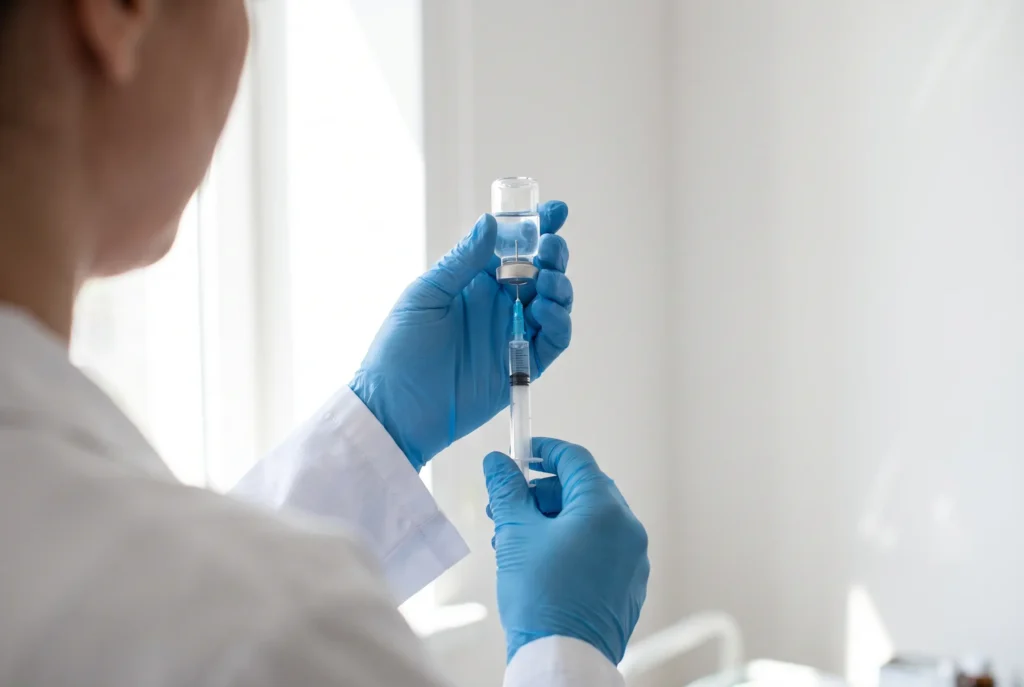
Monkey Beach is on every boat tour that leaves this island, and the macaques there are confident, fast and entirely used to people taking food out of bags. A scratch that breaks skin is not a story for later — it starts a clock. Rabies vaccination in Koh Phi Phi can be started immediately, at any hour, and the clock begins at the moment of the bite.
Do this in the first fifteen minutes
Before anything else, wash the wound with soap and running water for a full fifteen minutes by the clock.
This is not a formality. Rabies virus is fragile outside the body, and prolonged washing with soap physically removes and inactivates a large part of it. It measurably reduces the risk of infection and it is the single most effective thing that happens in the entire sequence.
On a boat tour that means asking the crew for fresh water and soap and doing it there rather than waiting until you are back in the village. Then apply antiseptic if any is available, and come straight in. Do not close the wound, do not bandage it tightly, and do not let anyone stitch it shut before the rabies question is settled.
What counts as an exposure
More than people assume. Any bite that breaks the skin, any scratch that draws blood or breaks skin, and any lick on broken skin or on the eyes, nose or mouth.
Monkeys are the commonest source here by a wide margin. Dogs and cats around the village also count, and bats particularly — their bites can be small enough to go unnoticed, so any direct bat contact is treated as an exposure.
A scratch from a monkey grabbing a bag counts. Being nipped while holding food counts. The animal looking perfectly healthy counts for nothing at all, because an animal can transmit rabies before it appears unwell.
The schedule, and why it can start here
Post-exposure treatment is a course of injections over roughly a month. For someone with no previous rabies vaccination, doses fall on day 0, day 3, day 7 and day 14, and the day 0 dose is the one that matters for timing.
We start the course here, immediately, and give you a written record with the exact dates for the remaining doses. That record is what lets you continue anywhere — the rest can be given in Krabi, Phuket, Bangkok, or at home, and the vaccine is the same product internationally.
If you have had a full pre-exposure course before, treatment is shorter: two doses, on day 0 and day 3, and no immunoglobulin. Tell us, and bring the record if you have it.
Immunoglobulin, and being straight about it
For deep wounds, multiple bites, or bites to the head, neck, hands or genitals, treatment should include rabies immunoglobulin as well as vaccine. It is infiltrated into and around the wound and gives immediate protection while the vaccine takes a week or two to work.
Immunoglobulin is not stocked on the island, and we will tell you so plainly. Where your wound category calls for it, the vaccine course starts here immediately and we arrange for you to receive the immunoglobulin on the mainland without delay — see evacuation and hospital transfer.
Starting the vaccine while arranging the rest is the right order. Nothing about waiting improves the outcome, and on an island where the last ferry has often gone, starting tonight rather than tomorrow is the whole argument for a clinic that never shuts.
Tetanus and infection, the other two problems
A bite is a dirty puncture wound, and rabies is only one of three questions.
Tetanus cover lasts about ten years and most travellers cannot remember their last booster. If you are outside that window or unsure, have it while you are here — see travel vaccinations.
Bacterial infection is the third, and animal bites become infected readily — cat bites in particular, because their teeth make deep narrow punctures that seal over the top. Many bites need antibiotics, and any bite becoming red, hot and increasingly painful over the following days needs seeing again; that is cellulitis. See monkey and animal bite treatment for the full picture.
How long you have, honestly
There is no defined safe window, which is exactly why the advice is to start immediately. The incubation period is usually one to three months but can be days, and it is shorter for bites closer to the head.
Starting on the day of exposure is what to aim for. Starting a few days late is still very much worth doing, and starting weeks later is still worth doing if no symptoms have appeared.
What is not worth doing is deciding on a boat that the monkey probably did not break the skin. Come and let somebody look — the consultation is inexpensive and the alternative is a decision you cannot revisit.
Not getting bitten on the boat tour
The macaques at Monkey Beach are habituated, quick, and associate people with food. That is not going to change, so the adjustment has to be yours.
Do not feed them, ever, including tossing something for a photograph. Do not carry visible food or drink in your hands on that beach. Leave bags on the boat rather than taking them ashore, and if a monkey takes hold of one, let it go — a bag is worth considerably less than a month of injections.
Do not make eye contact and do not smile with your teeth showing, which reads as a threat display. Give a wide berth to any monkey with young. If one becomes aggressive, back away steadily without turning, running or shouting. And keep children close — they are at eye level with a macaque and are bitten on the face and hands more often than adults.
Frequently asked questions
A monkey scratched me but barely broke the skin. Do I need this?
Come and let us look. Any scratch that breaks skin counts as an exposure, and this is not a judgement worth making yourself on a beach.
What is the first thing I should do?
Wash with soap and running water for a full fifteen minutes. It is the most effective single step in the whole treatment.
How soon must I start?
The same day where possible. There is no defined safe delay, and starting late is still worthwhile — but earlier is better.
Can I start at night?
Yes. The clinic is staffed around the clock, so a bite in the evening does not have to wait for morning or for a ferry.
Do you have rabies immunoglobulin?
Not on the island. Where your wound category needs it, we start the vaccine here immediately and arrange for you to get the immunoglobulin on the mainland without delay.
Can I finish the course in another country?
Yes. You get a written record with exact dates, and the vaccine is the same internationally. Many travellers complete the course at home.
What if the monkey looked healthy?
That tells you nothing useful. An animal can transmit rabies before it appears unwell.
Who treats you, and at what hour
English-speaking doctors on site, 24 hours a day. That is the part worth dwelling on, because Koh Phi Phi has no hospital and no road off it. The nearest emergency department is a ferry away on the mainland, and the ferries stop at night — so between roughly sunset and morning, a clinic that is actually open is the only medical care on the island. We are part of the Takecare Clinic group operating across Krabi and Phuket, which is what makes onward referral and continuing treatment on the mainland straightforward rather than something you arrange yourself from a hotel room.
Getting seen
Doctor Phi Phi Takecare Clinic is 24 hours, every day — genuinely, not as a phone line. No appointment is needed at any point and there is no wrong time to turn up. Walk in, or reach us on +66 82 140 3858 or WhatsApp. If you would rather not move, ask for a doctor hotel visit and we will come to you. And if this turns out to be beyond what the island can handle, that same call is how the ferry and the hospital transfer start being arranged — which on Phi Phi is a process worth starting early rather than late.