Sunburn treatment in Koh Phi Phi
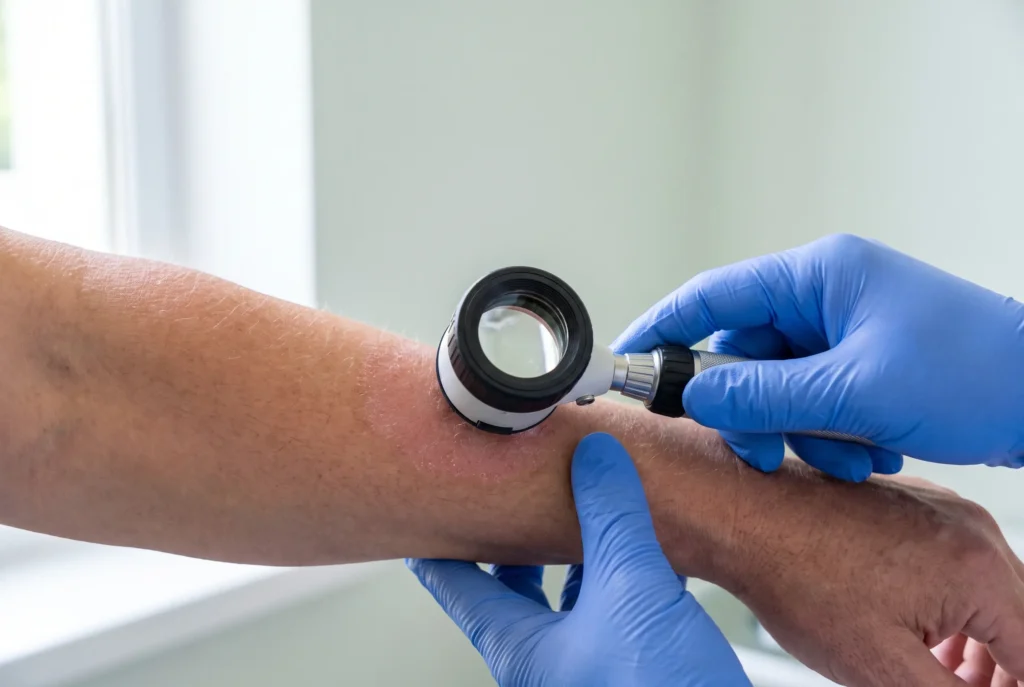
The sun here is stronger than almost anywhere most visitors come from, and it does not feel like it — a breeze on a boat deck masks the burn until the evening. Sunburn treatment in Koh Phi Phi covers everything from a painful red back to blistering burns that need dressing properly, and the distinction between the two matters more than people think.
Why this island burns people so efficiently
Phi Phi sits at about seven and a half degrees north, so the sun is close to overhead and the ultraviolet index regularly reaches eleven or twelve. That is the top of the scale, where unprotected skin burns in around ten to fifteen minutes.
Then the local multipliers. Water reflects light back up at you, so you burn from below as well as above. Pale sand does the same. A breeze off the sea removes the heat sensation that would otherwise tell you to move.
And the specific trap: the boat. Every trip here — the ferry, the Maya Bay tour, the sunset cruise — puts you stationary, exposed and cooled by wind and spray for hours. More people burn on boats here than on beaches.
First degree or second degree
First degree is red, hot and sore, with no blisters. The skin stays intact and it peels after a few days. Unpleasant, not dangerous.
Second degree involves blisters, and that is a different situation — the skin barrier is broken, fluid is being lost, and it can become infected. Extensive blistering, particularly across the back or shoulders, deserves proper assessment and dressing rather than aloe from a beach shop.
Come in for blistering over a large area, for any burn with fever or chills, for confusion or dizziness, for a burn on a child, or for a burn that becomes increasingly painful and red after day two rather than settling.
What actually helps in the first 24 hours
Get out of the sun completely, not into partial shade. Cool the skin with cool showers or damp towels, repeatedly, rather than one long cold session.
Drink considerably more than usual. A large burn pulls fluid into the skin and away from circulation, and dehydration on top of sunburn is how people end up needing an IV drip.
Ibuprofen genuinely helps here, because much of the pain is inflammation — unless there is any question of dengue, in which case paracetamol only. Aloe vera gel kept in a fridge is soothing and harmless. Plain moisturiser once the heat has gone helps the peeling stage.
What not to put on it
No butter, oil, coconut oil or toothpaste. They trap heat, and coconut oil in particular gets recommended constantly here and does nothing useful for a fresh burn.
No ice directly on skin, which adds a cold injury to a heat one. No anaesthetic sprays containing benzocaine on broken skin. And do not pop blisters — that roof of skin is a sterile dressing, and removing it invites infection.
If a blister bursts on its own, clean it gently and cover it. That is a wound now, and it wants proper dressing rather than being left open on a beach.
Sun poisoning, which is a real thing
A severe burn over a large area can produce systemic effects: fever, chills, nausea, headache, dizziness and profound tiredness. People describe it as feeling like flu the day after a boat trip.
That is a burn large enough to cause an inflammatory response and significant fluid loss, and it is usually accompanied by heat exhaustion because the same day produced both.
It responds well to fluids, rest and anti-inflammatories, and to being assessed rather than endured. Confusion, vomiting that will not stop, or fainting move it into the urgent category — see emergency care.
Burnt skin, wetsuits and salt water
Burnt skin under a wetsuit is a specific problem. The friction of pulling neoprene over a blistered shoulder tears the blister roof off, and salt water in the raw skin afterwards is a genuine infection risk on this coast.
A rash vest is the practical solution for the rest of the trip. It protects the burn, prevents the next one, and does not need reapplying every two hours.
Sunburn across the shoulders also makes a BCD strap miserable, which is worth knowing before day two of a course. Most people manage; some lose a dive to it, and that is avoidable with a vest on day one.
Not burning again for the rest of the trip
High factor sunscreen, applied more generously than feels reasonable, and reapplied every two hours and after every swim regardless of what the bottle claims about water resistance.
Cover up instead where you can. A rash vest, a hat and a shirt outperform any sunscreen and do not wear off. Stay out of direct sun between eleven and three, which is also when the viewpoint climb does most of its damage.
And protect the burn you already have. Newly healed skin pigments unevenly and burns again easily for weeks, and a peeling back exposed to another full day on a boat is how a bad holiday becomes a memorable one. Reef-safe sunscreen is worth choosing here too — the reef you are snorkelling over is the reason you came.
Frequently asked questions
How long does sunburn take to heal?
A first-degree burn settles in three to five days and then peels. Blistering burns take one to two weeks and need keeping clean.
Should I pop the blisters?
No. The blister roof is a sterile dressing. If one bursts on its own, clean it and cover it.
Is coconut oil good for sunburn?
No, despite how often it is suggested here. It traps heat in a fresh burn. Cool water and aloe vera gel are better.
Why did I burn on the boat?
Wind and spray remove the heat sensation that normally warns you, while reflected light off the water doubles the exposure. Boats burn more people here than beaches do.
Can I dive with sunburn?
You can, but pulling a wetsuit over blistered skin tears the blisters open and salt water in raw skin risks infection. A rash vest solves most of it.
When do I need to see someone?
Extensive blistering, fever or chills, confusion or dizziness, a burn on a child, or a burn getting more painful after day two.
Can I swim with sunburn?
Salt water on intact burnt skin stings but is not harmful. On broken or blistered skin, stay out — infection risk on this coast is real.
Who treats you, and at what hour
English-speaking doctors on site, 24 hours a day. That is the part worth dwelling on, because Koh Phi Phi has no hospital and no road off it. The nearest emergency department is a ferry away on the mainland, and the ferries stop at night — so between roughly sunset and morning, a clinic that is actually open is the only medical care on the island. We are part of the Takecare Clinic group operating across Krabi and Phuket, which is what makes onward referral and continuing treatment on the mainland straightforward rather than something you arrange yourself from a hotel room.
Getting seen
Doctor Phi Phi Takecare Clinic is 24 hours, every day — genuinely, not as a phone line. No appointment is needed at any point and there is no wrong time to turn up. Walk in, or reach us on +66 82 140 3858 or WhatsApp. If you would rather not move, ask for a doctor hotel visit and we will come to you. And if this turns out to be beyond what the island can handle, that same call is how the ferry and the hospital transfer start being arranged — which on Phi Phi is a process worth starting early rather than late.